

A precision servo press is a mechanical press that generates compression force through hydraulic cylinders, using hydraulic rods instead of mechanical rods to achieve compression. Its basic structure consists of two interconnected hydraulic cylinders, both filled with hydraulic oil, and of different sizes: the larger one is called the piston cylinder, and the smaller one is called the plunger cylinder.
Full Power Stroke
A hydraulic press can deliver its full power at any point in the stroke, rather than only at the very bottom—unlike mechanical presses. For instance, in drawing operations, the press’s full power is available even at the top of the stroke. Additionally, it offers faster setup times and eliminates the time-consuming task of adjusting the stroke nut on the slide to accommodate different dies.
Built-in Overload Protection
A 100-ton hydraulic press will exert a maximum of 100 tons of pressure (or less if preset), regardless of setup errors. There is no need to worry about overloading, damaging the press, or smashing a die. When the press reaches its preset pressure limit, the relief valve opens, effectively preventing any overload risks.
Lower Original and Operating Costs
Quality Servo Press are relatively simple in structure, offering a significant cost advantage over mechanical presses of comparable sizes. They have few moving parts, all fully lubricated by pressurized oil. Breakdowns, when they occur, are usually minor—unlike serious issues such as a broken crankshaft in mechanical presses. Typical maintenance involves replacing inexpensive parts like packing, solenoid coils, or occasionally a valve, which can be easily replaced without disassembling the entire machine. This results in more uptime and lower maintenance costs.
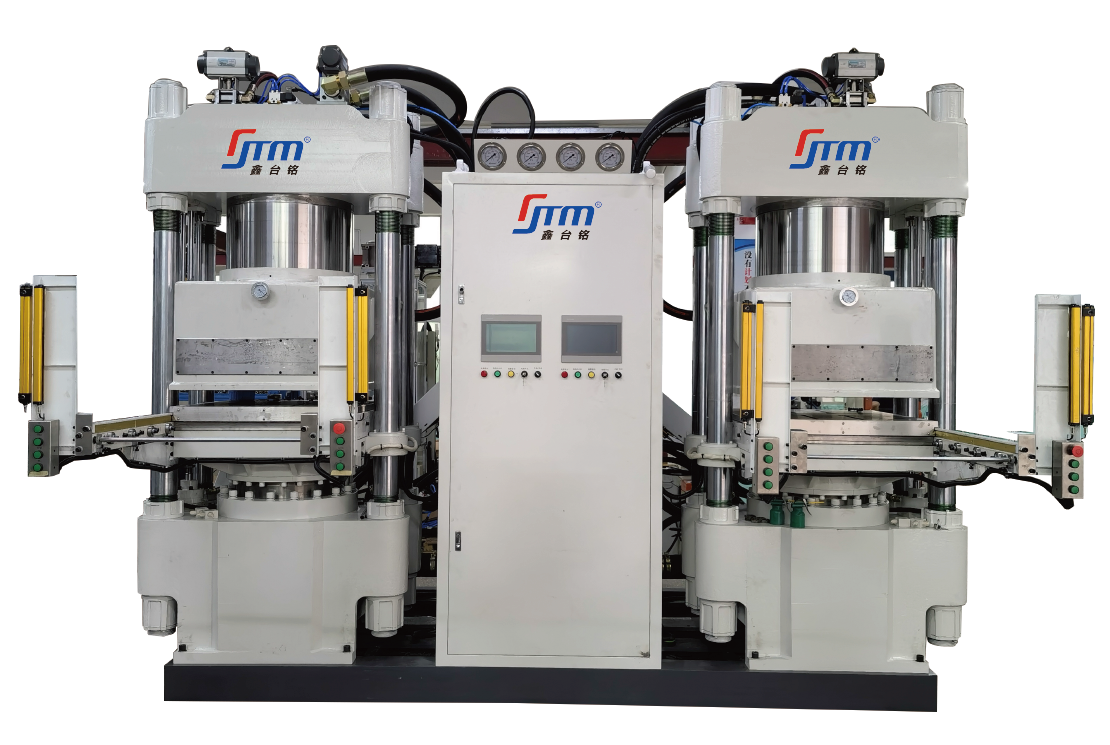
Larger Capacities at Lower Cost
Obtaining larger capacities with hydraulic presses is easier and more cost-effective. Stroke lengths of 12, 18, and 24 inches are common, and extra stroke length can be added without significant additional cost. Similarly, increasing the open gap (daylight) or table area—even small presses with large bed areas—is feasible at a low cost. Large 200-ton presses with relatively small beds are also available, as press tonnage does not dictate bed size.
More Control Flexibility
The power of a industrial servo press is fully controllable: ram force, direction, speed, force release, and pressure dwell duration can all be adjusted to suit specific jobs. Light-die jobs can be performed with reduced pressure; the ram can approach the workpiece rapidly and then switch to a slower speed before contact, extending tool life. Timers, feeders, heaters, coolers, and various auxiliary functions can be integrated into the operation sequence to meet job requirements—hydraulic presses offer far more functionality than simple up-and-down movement.
Greater Versatility
A single hydraulic press can handle a wide range of tasks within its tonnage capacity, including deep drawing, shell reduction, urethane bulging, forming, blanking and piercing, staking, punching, press fitting, straightening, and assembly. It is also used for powder metal forming, abrasive wheel forming, bonding, broaching, ball sizing, plastic and rubber compression, and transfer molding.
Quiet Operation
Compared to mechanical presses, hydraulic presses have fewer moving parts and no flywheel, significantly reducing overall noise levels. Properly sized and mounted pumping units meet or exceed current federal noise standards, even when the pump is under full pressure.
More Compact Design
A typical 20-ton hydraulic press stands 8 feet high, 6 feet deep, and 2 feet wide. A 200-ton press—ten times the capacity—is only 10 feet high, 9 feet deep, and just over 3 feet wide, occupying only 50% more floor space. This makes hydraulic presses increasingly cost-effective compared to mechanical presses as capacity increases.