

In modern industrial manufacturing, hydraulic presses are indispensable equipment, valued for their stable performance and strong pressure output. Understanding their working principle and basic parameters is crucial for optimizing production efficiency, while the integration of Servo Press technology has further upgraded their precision. This article details the core working principle and key parameters of hydraulic presses, and explores how Quality Servo Press and Industrial Servo Press complement their functionality.
Working Principle of Hydraulic Press: Based on Pascal’s Law
The working principle of a hydraulic press is rooted in Pascal’s law, which states that when pressure is transmitted through a liquid in a closed container, the pressure remains unchanged throughout the fluid. This principle enables the hydraulic press to convert hydraulic energy into mechanical energy, achieving efficient and stable pressure application— a feature that aligns with the precision focus of Quality Servo Press.
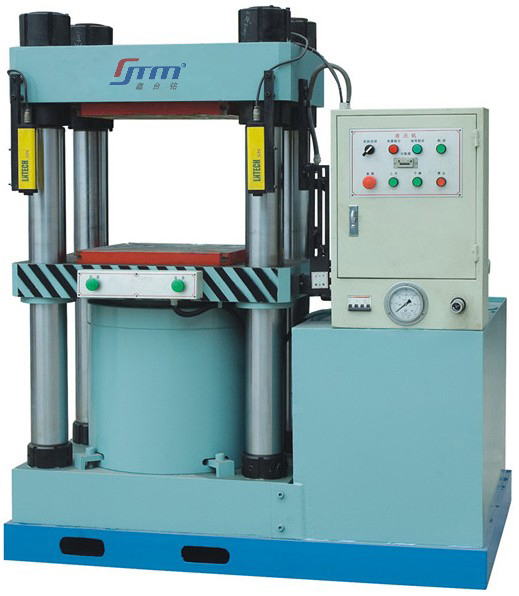
A standard hydraulic press consists of three core components, each playing a vital role in its operation:
Power System: Responsible for providing necessary pressure and power, it is usually driven by an engine or electric motor to operate the hydraulic pump, laying the foundation for the entire system’s operation. This component is also a key area where Industrial Servo Press technology can be integrated to enhance energy efficiency.
Hydraulic Control System: Composed of valve blocks, check valves, and overflow valves, it precisely controls the flow direction and pressure of hydraulic oil. This precise control is similar to the programmable capabilities of a Servo Press, ensuring the press operates stably and accurately.
Actuator: Mainly a hydraulic cylinder, it converts the pressure energy of the liquid into mechanical energy, realizing the required linear or rotary motion to process workpieces— the core executive part that works in tandem with servo technologies for optimized performance.
Basic Parameters of Hydraulic Press: Key to Stable Operation
The performance and application scope of a hydraulic press are directly determined by its basic parameters, which are also important reference points when matching it with an Industrial Servo Press for upgraded production lines. The key basic parameters include:
Working Pressure: The maximum pressure the hydraulic press can generate, usually expressed in megapascals (MPa). It determines the press’s ability to process high-hardness workpieces, and when combined with a Quality Servo Press, it can achieve more precise pressure regulation.
Workbench Size: The size of the hydraulic press’s work surface directly affects its capacity to handle workpieces of different sizes. Larger workbenches are suitable for large-scale industrial parts, a demand often paired with Industrial Servo Press systems for automated processing.
Stroke Speed: The moving speed of the piston or ram, which impacts processing efficiency and precision. This parameter can be further optimized by integrating Servo Press technology, enabling adjustable speed for different processing scenarios.
Hydraulic Oil Type and Capacity: The type of hydraulic oil and the system’s oil capacity affect the machine’s performance, service life, and stability. Choosing the right hydraulic oil is as critical as selecting a high-quality Quality Servo Press to ensure long-term reliable operation.
In summary, mastering the working principle and basic parameters of hydraulic presses is essential for rational equipment selection and production optimization. The integration of Servo Press technologies, especially Quality Servo Press and Industrial Servo Press, further enhances the precision, efficiency, and versatility of hydraulic presses, making them more adaptable to the evolving needs of modern manufacturing.